Untaken Trails
  • Home
  • About
  • Multi-Day Trails
    • Bucket List
    • 2025
      • Arizona Trail 2025
      • Spruce Woods Provincial Park
      • Riding Mountain National Park
    • 2024
      • Arizona Trail
    • 2023
      • Gros Morne National Park
    • 2022
      • Pioneer Footpath
    • 2021
      • GDT Section C
      • The Boreal Trail
    • 2020
      • GDT Section B
  • Dayhikes
  • Gear
    • Gear We Use
    • Gear Reviews
  • Blog
  • Contact
  • Campsite Selection: Finding the Perfect Spot in the Backcountry

    When choosing a campsite in the backcountry, there are a few considerations to make. It isn’t always possible to set up camp wherever you feel like it. You also might make the mistake of setting up your tent in a spot that you will regret later. Below are some tips to help you make the best decisions when choosing a campsite.

    Is Camping Permitted in the Area?

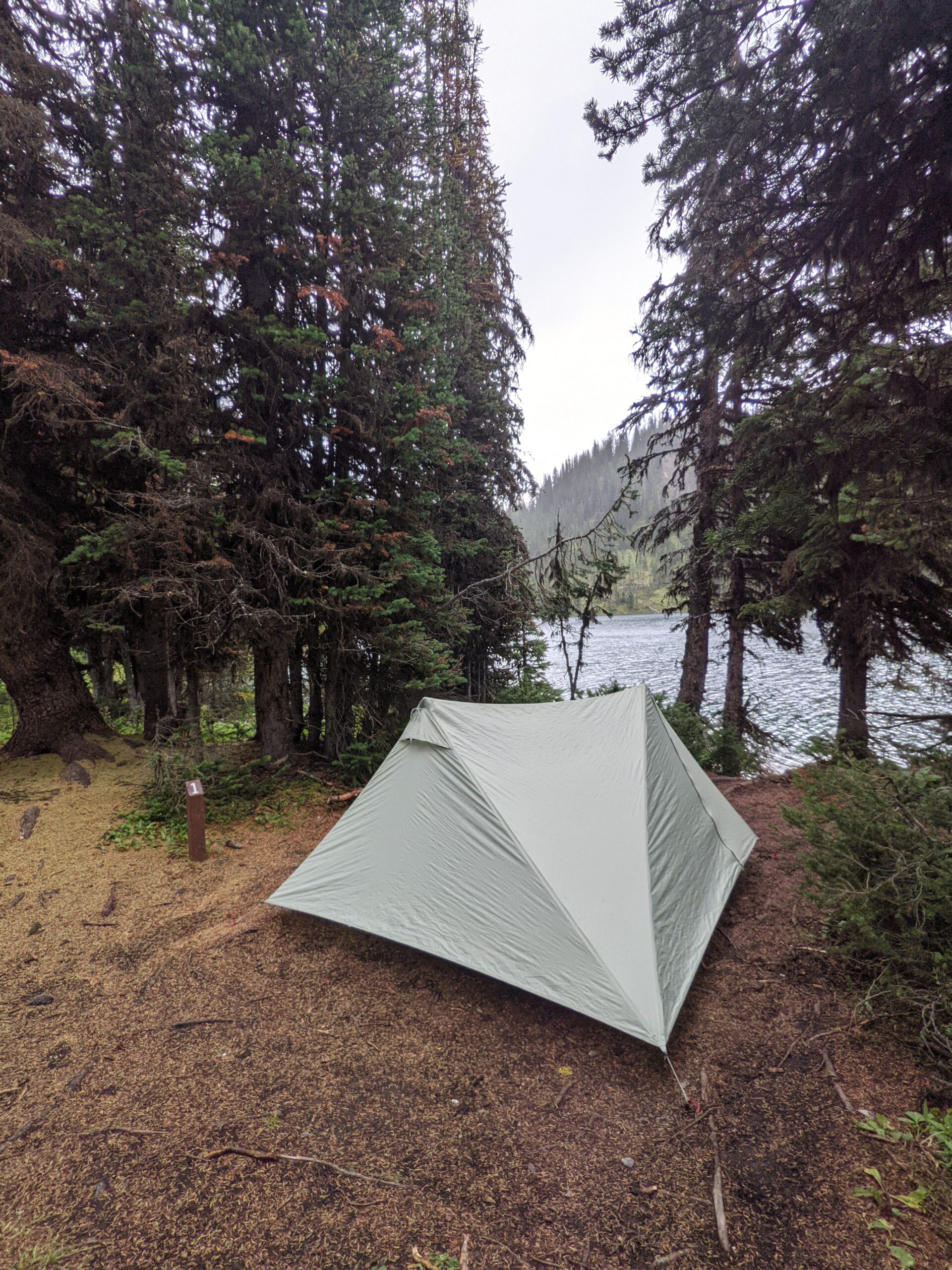
    Tent at Beatty Lake.

    Sometimes you won’t find any campsites in the backcountry. This could simply be due to agencies deeming the area as sensitive or an animal corridor. When planning your hike, identify where camping is not permitted. This could add some complexity when you are determining the distance you must hike in a day. Do not set up a campsite in these areas unless it is an absolute emergency. Basically only set up your tent, if you are waiting to be rescued. Try your absolute best to exit these areas before you set up your campsite. Your feet and back might be tired from walking the extra miles to exit the restricted area, but respect the rules.

    Do You Require a Permit or Reservation?

    Depending on where you are hiking, you may need to pre-book your campsite. This can be challenging when you aren’t sure how far you will hike in a day and commits you to certain dates. If you are going faster or slower on your hike, you may find this frustrating.

    Pay attention to when you you need to make reservations and note any alternates you may to take if the system says a campsite is full. Do your best to figure out your route, make the appropriate reservations, and carry your permits. You don’t want to be the reason that hikers get a bad reputation in the backcountry. Follow the rules.

    Distance From Campsite to Campsite

    Before your hike, review your map for pre-established sites. Also look at apps with hiker comments indicating spots not marked on an official map. With this information, you can consider your own hiking fitness to calculate how far you will be able to hike in a day. Look at your map and review the camping regulations for the area you are in to determine where you will stop for the night. You can either make a reservation if required, or you can find an unofficial campsite while on trail if permitted. The choice is up to you.

    Choosing an Unofficial Backcountry Campsite

    When you are in the backcountry and there are no marked campsites, you will need to use your judgment when selecting a site to pitch your tent. Below are some considerations to help you determine the best spot to rest for the night.

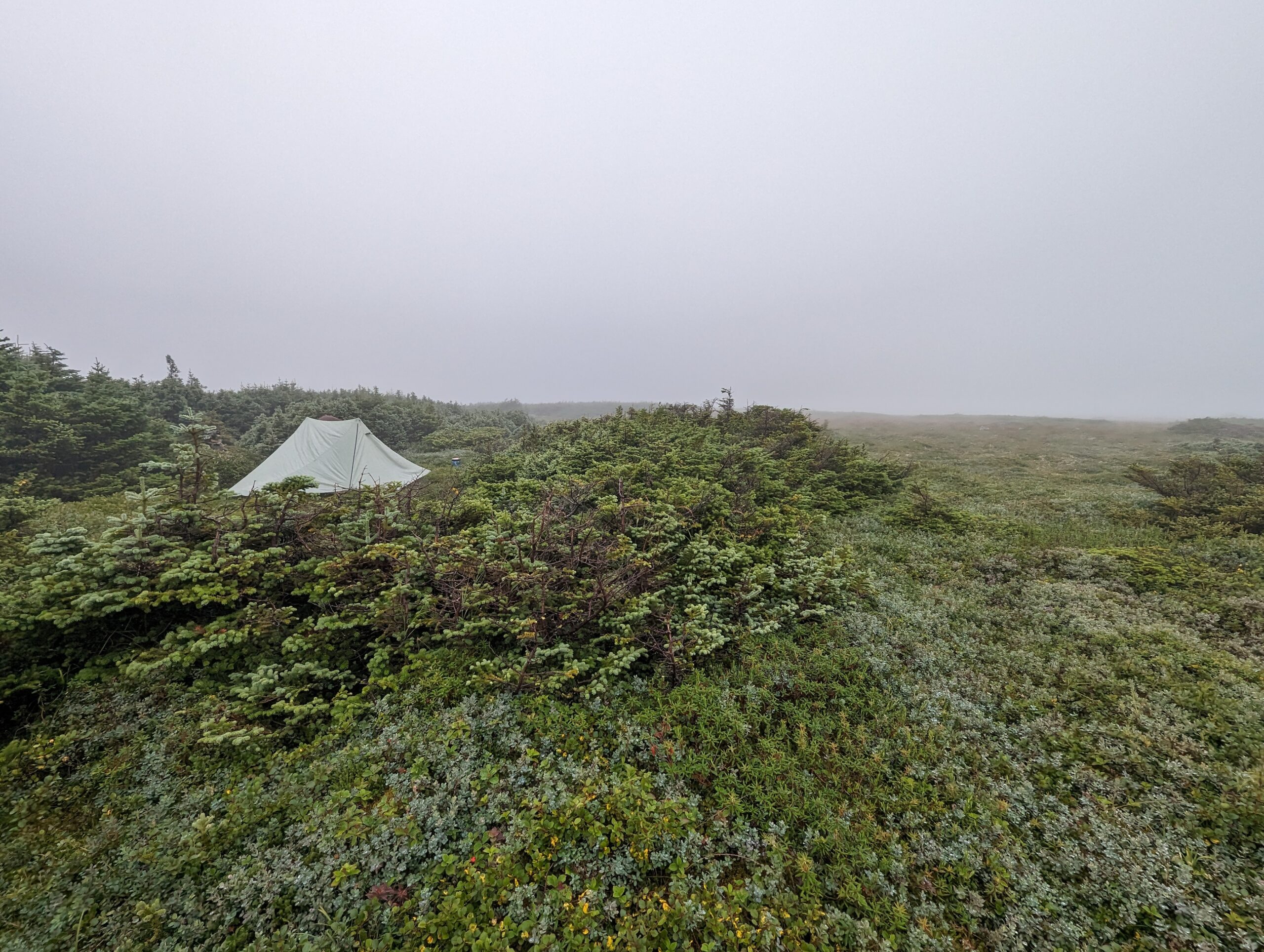
    Tent sheltered by tuckamore at Gros Morne.

    Find a Sheltered Campsite

    Sometimes a spot that looks like a great place to camp, isn’t the best place. Depending on where you are, if there is a storm coming through and you are in an open field, the wind will batter your tent. Find a campsite surrounded by bushes. Bushes will act as a wind guard will provide a level of protection from any wind storms that are passing through.

    Look For Flat Ground

    In the wilderness, ground isn’t completely flat. There are roots and rocks that give the ground character. Remember, a flat-looking campsite can be deceptive. There may be a slope to your campsite, which means your blood could be rushing to your head all night. By taking a few minutes to examine your site, you can position your tent in such a way that roots are between camping pads and that your head is in a comfortable angle.

    Locate a Spacious Campsite

    By spacious, I mean a campsite that provides enough space for your tent. You don’t want to try to squeeze your tent onto small space only to have a sharp rock or branch puncture the wall or floor. Taking the extra time to examine the ground and arrange your tent accordingly will save you from the headache of a repair down the road. Position your tent to prevent trees, boulders, logs or bushes from blocking both doors. Going down to one door is fine, but ensure one door has no obstructions.

    Does Water Run Through It?

    Before putting your tent on the ground, look for any signs on the dirt where a stream of water may have flowed through. Now look beyond the campsite for hillsides or nearby streams that could overflow. When you are downhill, there is the possibility of water pooling where you set up your tent. The last thing you want is to wake up in the middle of the night to an inch of water in the bottom of your tent. And a final point, please don’t camp in a wash. A dry creek bed doesn’t necessarily mean it is an extinct creek. It may mean it is a path the water will take during a flash flood. Be safe.

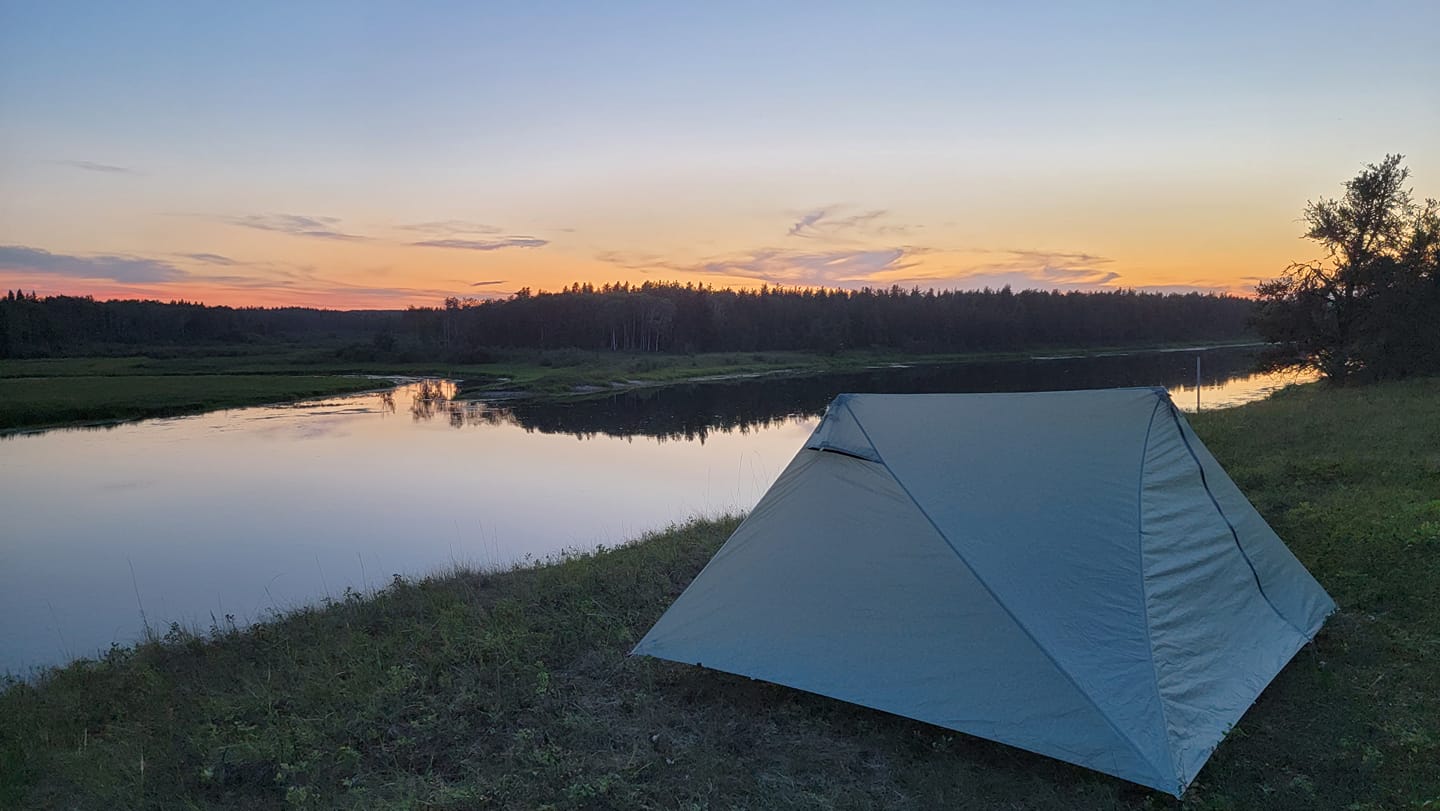
    Campsite by the river.

    Look For a Nearby Water Source

    When possible, find a campsite that is easy walking distance to a water source. Having water nearby is helpful for cooking for meals and even filling your water bottles before leaving the next morning. If you aren’t able to camp near a convenient water source, at least note on your map where the last and first water sources are so you can plan accordingly.

    Note Any Animal Activity Near Your Campsite

    A campsite might not be the best option when there is a den a few trees over. Look for signs where bears may have recently been digging up a meal or for fresh scat. Game trails will tell you that animals are present, but that doesn’t always mean bears. You may be camping near deer, moose, or skunks. Be aware of what might be lurking nearby and be prepared for possible encounters. If the signs make you feel uncomfortable, don’t stay there.

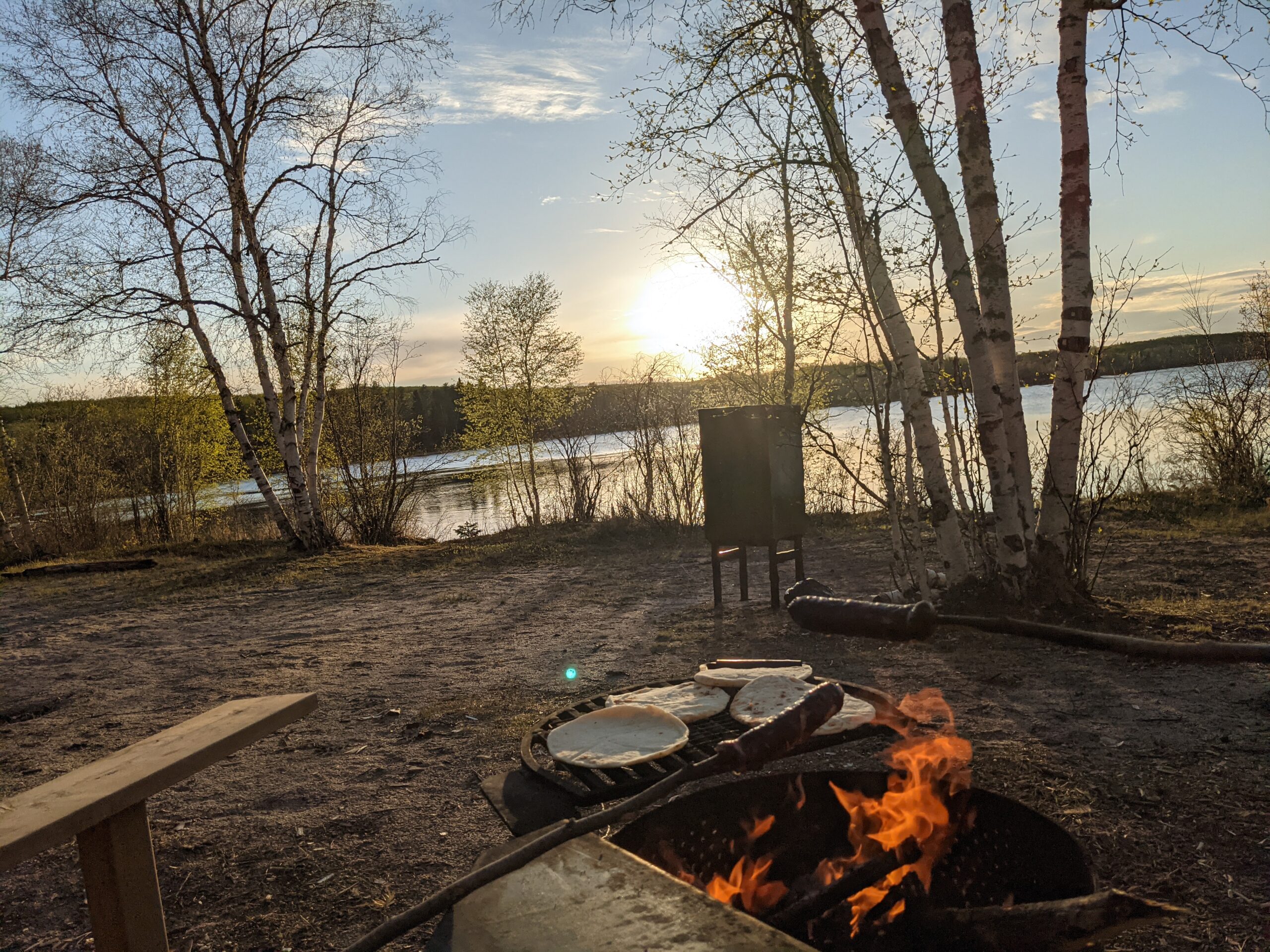
    Bear locker.

    Food Storage

    Adding to animal activity, it is important to look for the best way to store your food in the backcountry. There are a few options for food storage, but ultimately, you want your food kept away from your campsite. The most ideal option is if your campsite has a storage locker or established bear hang. If you need to make your own bear hang, look for appropriately spaced trees. Ursaks and BearVault canisters can provide added flexibility for food storage in places where traditional bear hangs aren’t an option. Whatever you do, don’t store food in your tent when in bear country. Take the time to find the right spot for your tent and another for food storage and eating.

    Other Campsite Considerations

    There are a few other considerations for choosing a campsite in the backcountry. While the ground might be perfect, you will want to look at the trees around you. If they look like they could fall over in the windstorm or that there are branches ready to spear your tent, don’t position your tent under them. These are called “widow makers”. Find a spot away from a falling tree’s path, especially when you are expecting bad weather.

    Cleanliness of the campsite can be a concern on high traffic trails. Unfortunately, not everyone will be considerate and some may leave garbage behind. When possible, pick up what you find and take it with you to keep it clean for others. If you feel that the site has the potential to attract rodents or predators, or the campground has been used as a public restroom (look for toilet paper), you may want to find another spot.

    Finally, check out who else is already camping there. If you feel that they are going to be noisy neighbors who are a bit rowdy (more common at campsites with easier road access), you might want to keep hiking. Most neighbors aren’t a problem are are likeminded people who are wanting to enjoy nature and exchange stories. Every now and then, you might get a set of neighbors who want to party away their weekend. If that’s your scene, maybe they’ll offer you a little trail magic and you’ll have a great time sharing the spot together.

    To Conclude

    These are tips to help you determine an appropriate campsite in the backcountry. If you are in a safe and legal place to set up camp, that is great place to camp. If you can find a campsite that also has a great view, even better!

    Cheryl

    February 17, 2024
    Multi-Day Trails, Outdoors, Tips
    camping, campsite, hiking, planning, preparation, tips
  • Mentally Preparing for a Multi-Day Hike

    Notice I didn’t say, “thru-hike”? That is because I haven’t spent months on a trail and so I can’t speak to being away from home for a duration longer than two weeks. What I do have is experience with trying to keep up with a faster partner, mom-guilt, and pushing through day after day of hiking tough terrain. Here are a few of my recommendations for a successful multi-day hike.

    Set Goals

    Trails aren’t easy. Unless you picked a trail with flat terrain and nice gravel paths, you are in for elevation ascents and descents, uneven ground, and a variety of other changing conditions from mud to bugs. There are times when you will feel miserable with the rain pouring down on you while the clouds block the views that you were hoping to see after a long climb. You might also find that despite your best efforts to prepare for the hike, your legs aren’t cooperating and discover climbing switchbacks to be especially difficult. Setting goals will be a huge help in winning the mental game of a hike.

    Creating goals allows you to break your hike into bite-sized pieces rather than feel intimidating by what is yet to come. Goals can look different depending on what motivates you, such as:

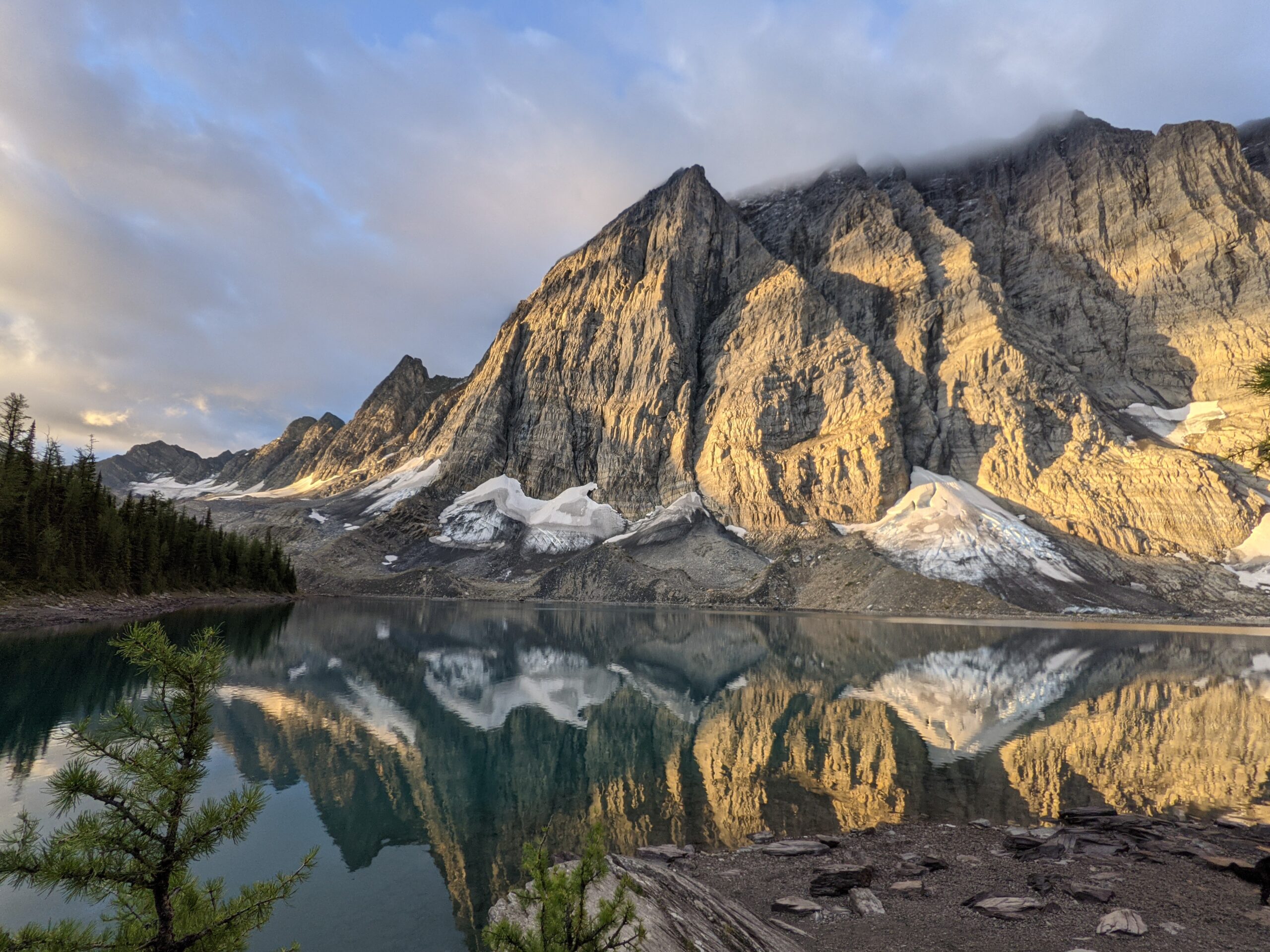
    Floe Lake in the moring
    • Target a visible point on the trail, such as a tree twenty feet above on the switchback or the top of a particularly muddy climb.
    • Take a Zero Day. There is no rule that you can’t leave trail and head into town for a shower, an overnight in a hotel or a nice hot meal. Setting the goal of a Zero Day might be the motivation you need when facing a particularly challenging day.
    • Reward yourself for reaching a milestone. Rewards can be as simple as a long rest or a drink of water to a snack you have been saving or a drink you tucked away in your pack. Celebrate 50km, 100km, or reaching the top of your first pass. Whatever it is, celebrate your wins.
    • Set a long-term goal of a particular campsite you want to reach. For me, I was determined to get to Floe Lake on the GDT. I had seen pictures before the start of our hike and was going to push through to make sure I got there.

    Know Your Why

    There will be stretches of the trail where you love every moment of being out there and times where you wonder what you got yourself into. When the bugs are trying to bite, your legs are scratched up and your feet hurt, you can find yourself spiraling into continuous thoughts of misery. This negativity can take distract you from the beauty that surrounds you and taints the experience.

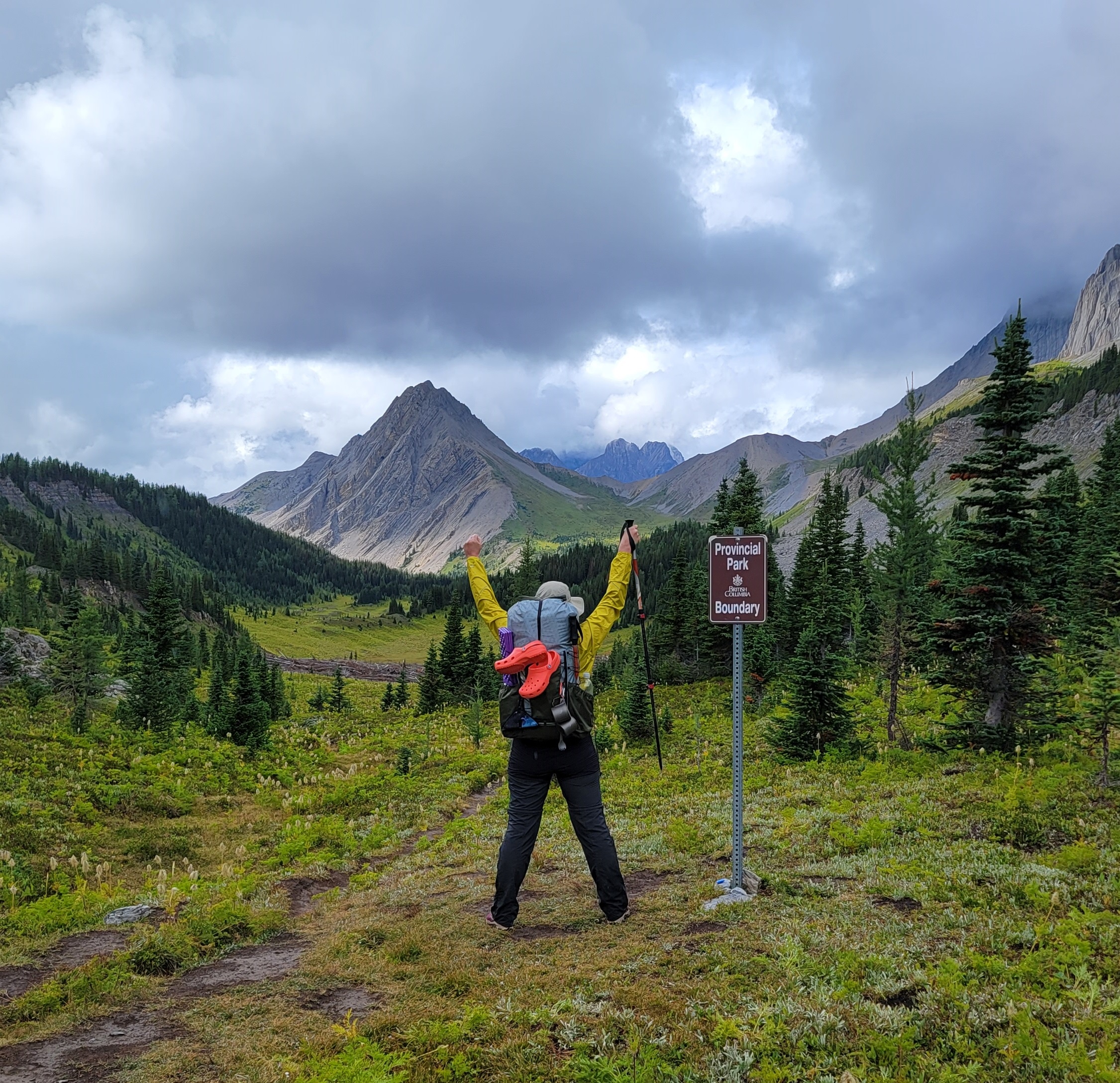
    Victory at the S Kananaskis Pass

    Recalling why you decided to hike the trail will help refocus your thoughts away from the immediate misery to the payoff that lies ahead. For some, the why will be the accomplish of completing a trail end to end. Others might want to hike a trail to reach a particular view. Fitness might be a why. There are also hikers who are there for the personal journey. Whatever your reason is for hiking, there will be days when you will reflect back on your why. It doesn’t need to be an earth-shattering reason, but the reason will be important to you. The reason is what you will judge your days against. Are you getting out of this hike what you’re putting into it? Is it worth the suffering, sacrifice or cost?

    During the last leg of our GDT hike, I found myself mentally drained. We were pulling long days on the trail and I felt I had spent most of those days staring at the ground rather than at the views. The trail had become rather technical with overgrown bushes snagging my already fatigued ankles. Whenever I caught up with my husband, he would take off and I wouldn’t get a chance to stop and take in the view as I felt I was going to be left behind. I was struggling to finish the hike because I wasn’t satisfying the why, which is to enjoy the views. Once I expressed to my husband that he needed to give me time to stop to enjoy the views, I found a renewed energy every time we took a break. Knowing your why is no joke.

    Reflect on How Far You’ve Come

    Take a moment to look over your shoulder to see how far you’ve climbed or the distance you’ve covered. There will be days when the climb seems to go on forever. While some of the climb will be more vertical with switchbacks zig-zagging up the mountain side, other climbs will also take you across more horizontal miles. Depending on where you are, you might see a distant highway, a river you crossed in the morning, or the valley where you camped the night before. You might not be able to see the bottom of the mountain where the climb started or the lake you swore was down there somewhere but is obscured through the trees or blocked by a ridge.

    Every time you put one foot in front of the other, you are that much closer to completing your trail or celebrating your next milestone. Looking back provides a moment for you to reflect on what you have accomplished. On our GDT hike, I can recall a few times when I looked back and marveled at how far I had come.

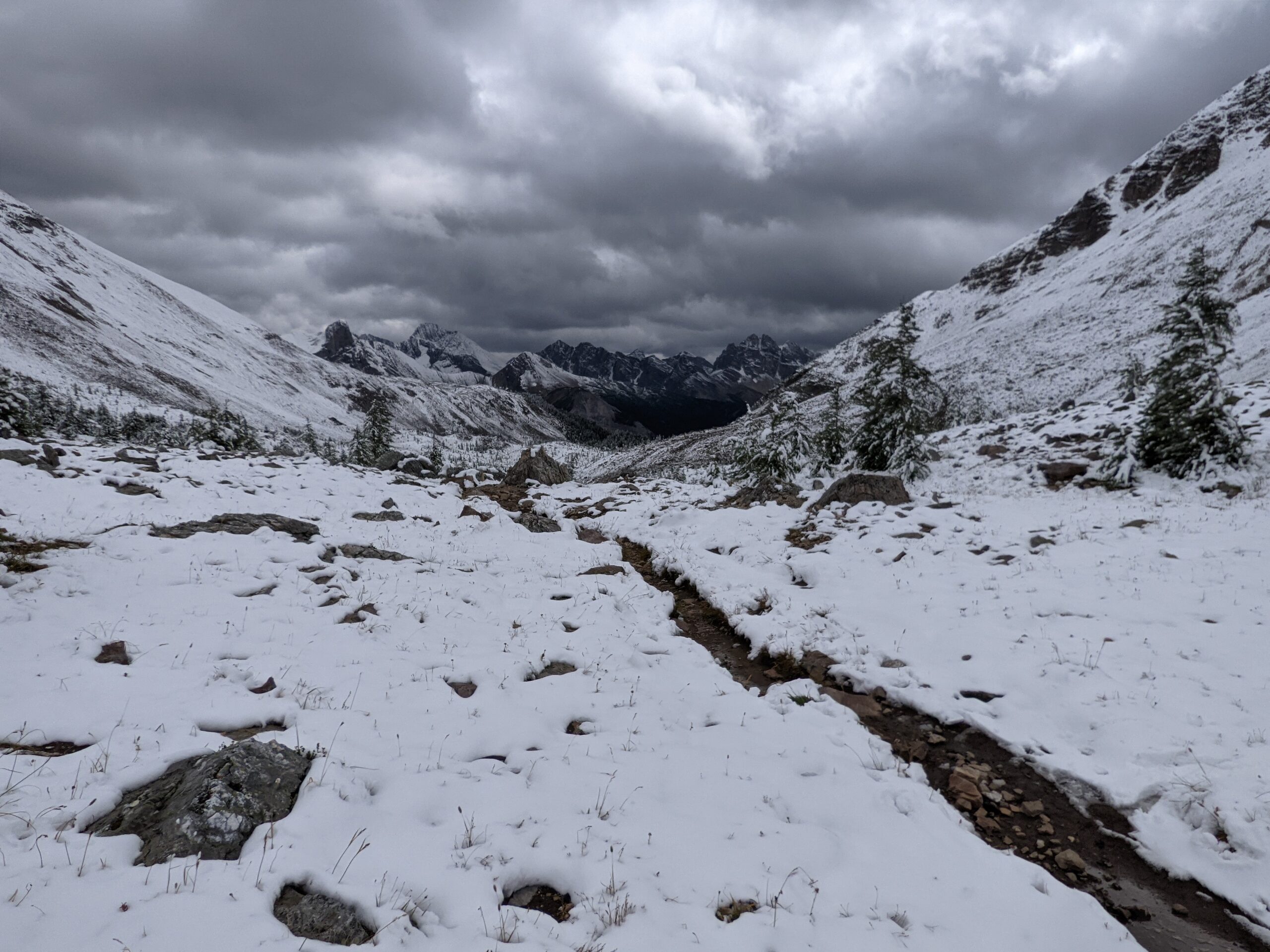
    One particularly memorable moment was standing at the top of Wonder Pass surrounded by snow and I turned back to see the ridgeline of mountains behind us. Although I was chilly, I took some time to ponder how I was standing there in the snowy mountains. I never imagined myself hiking in a place like that, and there I was. It felt surreal. We had come so far and we couldn’t see where we had started from. There was still so much trail to go, but I felt like I had conquered the GDT.

    Hike Your Own Hike

    On the trail, I tell my husband he hikes like a gazelle or a mountain goat. While he happily hikes up a mountainside, I work for every inch. He doesn’t look like he feels any drain from the climb while I need to stop and guzzle water. Our bodies are very different and it can make for some interesting challenges when I want to rest on flat ground when he is getting twitchy, anxious to get moving again.

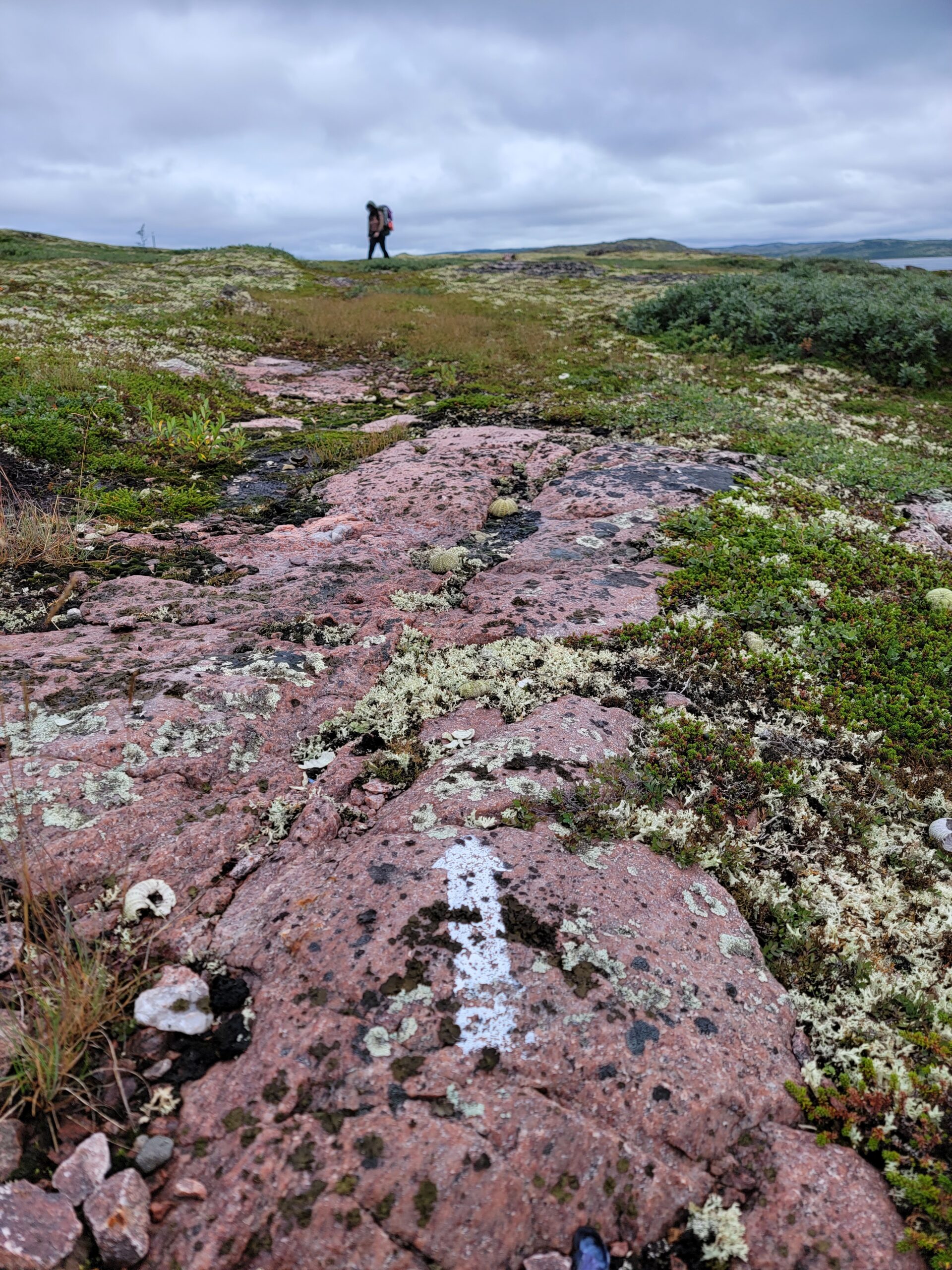
    Pioneer Footpath marking

    Hiking your own hike, to me, means hiking without judgment. Don’t try to compare your need for breaks against your partners. Communicate what you need and set expectations for frequency of stops and distances that can be covered in one day. Depending on your comfort level, you might have your faster partner hike ahead of you with the intention of to meet up where there is a junction or at a creek crossing. Your partner could scout out flat ground during difficult climbs so you know how much further you need to go before your next break.

    You don’t need to be jealous of your hiking partner’s abilities or criticize how you perceive your fitness level. Remember that you have 30lbs or so of weight on your back and are doing something that millions of people wouldn’t dare try. You are already doing something amazing and while it’s hard, you’re putting one foot in front of the other and will reach your campsite or the trailhead if you keep going.

    Include Your Loved Ones

    Being in the middle of the mountains or forest means you have limited to no access to internet or cell phone service. This can be challenging if you have children or pets at home. Even though you have made arrangements to have them cared for while you are on trail, you will find your thoughts being pulled toward wondering if they miss you or if they are okay. These thoughts distract you from the views you have worked so hard to reach.

    Remember that your time on the trail is limited. While you aren’t away on a work trip, you are doing something that mentally recharges you. Your children, and your pets, will enjoy hearing about your adventure and see the pictures you took along the way. Your dog will be especially interested in hearing about all the squirrels you saw.

    Identify plants, rocks, formations, or any other sights long the trail that a loved one back home would appreciate and take a photo of it. Finding ways to include them helps to eliminate any guilt you feel about leaving them behind and makes it feel like they are with you. Thinking about what they might like will also get you thinking about different perspectives and you will spot things on the trail that you might otherwise have missed. You don’t need to bring them a souvenir when you come home. Just tell them what you saw that reminded you of them.

    Write It Down

    My final recommendation is to journal and write about the highlights of your day. Write about there being toilet paper in outhouses, animals you spotted, the ups and downs from the day… whatever it is, document it. You can read your entries while on trail or when you leave trail, but writing helps you sort through your thoughts from the day and identify changes you need to make to improve the next day.

    Journaling also gives you something to review before your next hike. You can see what worked for you and what factors were negatively impacting your experience. When preparing for your next hike, you can implement changes or equip yourself differently so you have all the tools in place to have a successful hike. Adding a pen and a thin notebook to your pack isn’t a big addition to the weight you’ll carry. It will not only give you that opportunity to mentally check-in, but it will also give you another way to capture your trip and recall those great memories you make along the way.

    Cheryl

    January 28, 2024
    Multi-Day Trails, Tips
    health, planning, preparation, tips
Previous Page
1 2

©2023 All rights reserved.

  • Facebook
  • YouTube